Strengthening Water Quality Monitoring in Pangandaran Floating Net Cages to Support SDGs 13 and 14
11 Apr 2026 - 01 Jan 2026
Pangandaran, 11 April 2026
A water quality measurement training program was conducted in the Floating Net Cage aquaculture area, known as Keramba Jaring Apung (KJA), in Pangandaran on 11 April 2026. This activity was organized by WCU Equity in collaboration with PT Pasifik Bumi Samudera as part of an effort to strengthen water quality monitoring capacity in aquaculture areas.
The training aimed to improve the ability of KJA managers and related stakeholders to independently measure, monitor, and interpret water quality conditions. In floating net cage aquaculture, water quality plays an essential role in maintaining fish health, supporting productivity, and reducing environmental risks. Therefore, regular monitoring is important to ensure that aquaculture activities remain environmentally responsible and sustainable.
During the training, participants were introduced to several key water quality parameters, including temperature, pH, and salinity. These parameters are important indicators for assessing aquatic environmental conditions and detecting early signs of potential water quality degradation. Participants also received practical guidance on how to operate monitoring equipment, read measurement results, and understand initial responses when water quality conditions show unfavorable changes.
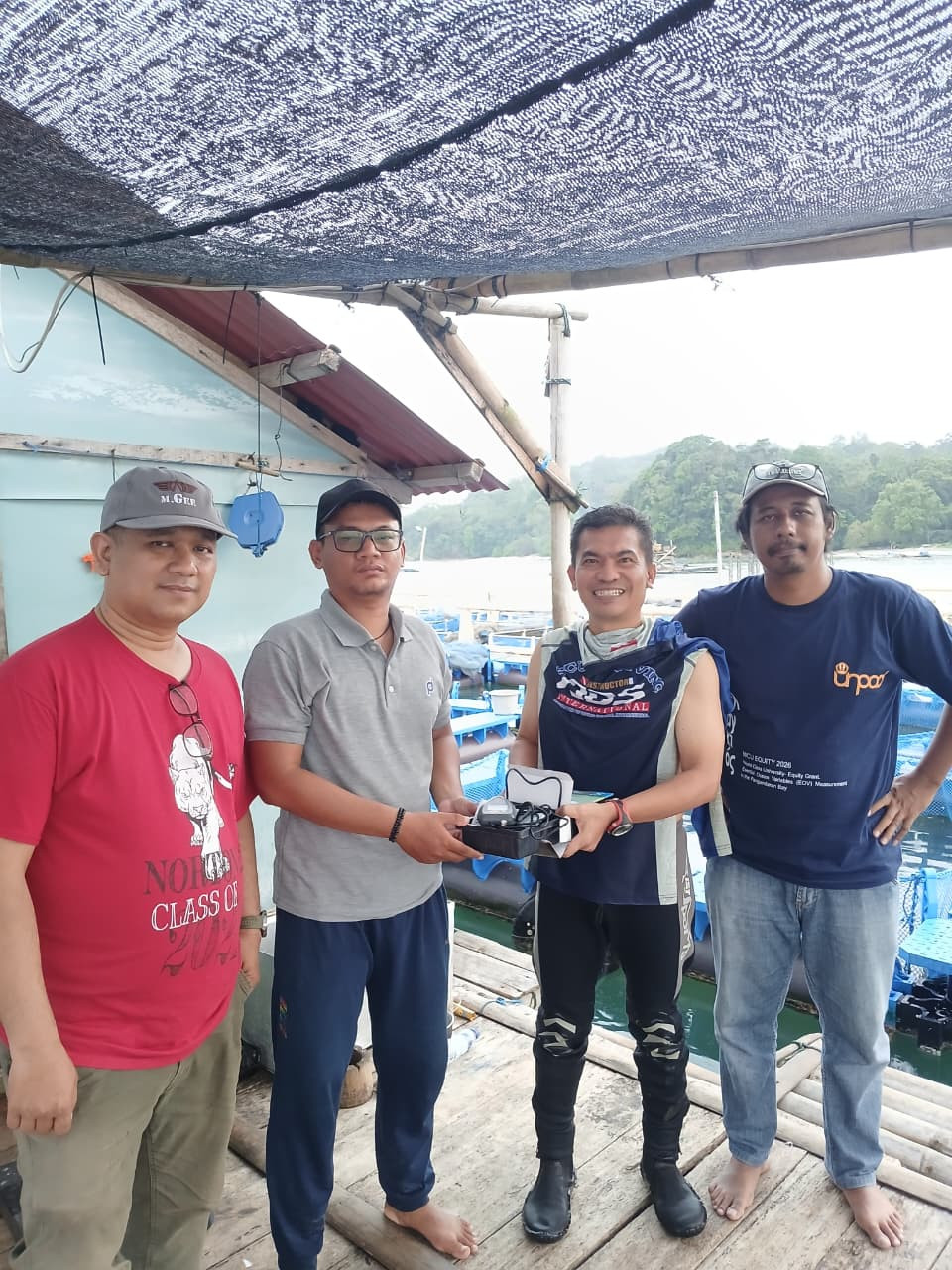
As part of the program, WCU Equity handed over 1 unit of Online 5 in 1 Water Quality Tester WF991 to PT Pasifik Bumi Samudera. The equipment was received by Pak Deni as the representative of the KJA management team from PT Pasifik Bumi Samudera. The provision of this monitoring tool is expected to support routine water quality measurement in the Pangandaran KJA area, allowing environmental changes to be identified earlier and managed more effectively.
This activity also contributes to the global agenda of the Sustainable Development Goals, particularly SDGs 13 and 14. SDG 13 emphasizes climate action, including efforts to improve resilience and adaptation to climate-related impacts, while SDG 14 focuses on the conservation and sustainable use of oceans, seas, and marine resources. In this context, water quality monitoring supports both goals by helping aquaculture actors understand environmental changes and maintain healthier coastal and marine ecosystems.
Furthermore, the program is aligned with the spirit of the Ocean Decade, which encourages the use of science, technology, and collaboration to support a healthier and more sustainable ocean. Water quality measurement is also closely related to the concept of Essential Ocean Variables (EOVs), which refer to key variables used to observe, understand, and manage ocean and aquatic systems. Parameters such as temperature, dissolved oxygen, and salinity are examples of environmental variables that can provide important information about the condition of aquatic ecosystems.
Through this training and the provision of monitoring equipment, KJA managers in Pangandaran are expected to gain stronger capacity in using water quality data as a basis for daily management decisions. Regular monitoring can help support productive aquaculture practices while reducing potential risks to the surrounding aquatic environment.
Overall, this activity represents an initial collaborative step between WCU Equity and PT Pasifik Bumi Samudera in strengthening science-based aquaculture management. By combining training, technology transfer, and environmental awareness, the program supports more sustainable floating net cage practices in Pangandaran.