SWOT Satellite Reveals Dynamics of Small Seas with Major Impact on Global Climate
3 months ago
The ocean plays a crucial role in maintaining the Earth's climate balance through its ability to store heat, distribute energy, and regulate nutrient cycles that support marine life. Most of the excess heat from global warming is also absorbed by the ocean, making ocean conditions highly influential on global climate change. However, many small-scale ocean processes are not yet well understood because they are difficult to observe globally and are highly dynamic. These phenomena are known as submesoscale dynamics ocean movements on the scale of approximately 1-100 km that are rapid and complex.
For decades, conventional altimetry satellites have only been able to observe major currents and large-scale ocean eddies. This technology has resolution limitations and has been unable to capture small-scale, rapidly changing processes at the sea surface. As a result, small-scale ocean phenomena that could potentially affect water mass mixing, heat distribution, nutrient transport, and the balance of marine ecosystems remain inadequately monitored. This data limitation means that many important ocean processes are not yet fully understood by scientists.
These small-scale ocean phenomena turn out to be far more active and important to the global climate system than previously assumed. This finding comes from observations by the SWOT satellite, which can map the sea surface at high resolution and over wider areas. These data provide new insights into ocean dynamics that were previously difficult to detect from space. The advent of this technology opens significant opportunities for modern oceanography research and the development of more accurate climate models.
Submesoscale Ocean Dynamics Now Successfully Observed Globally
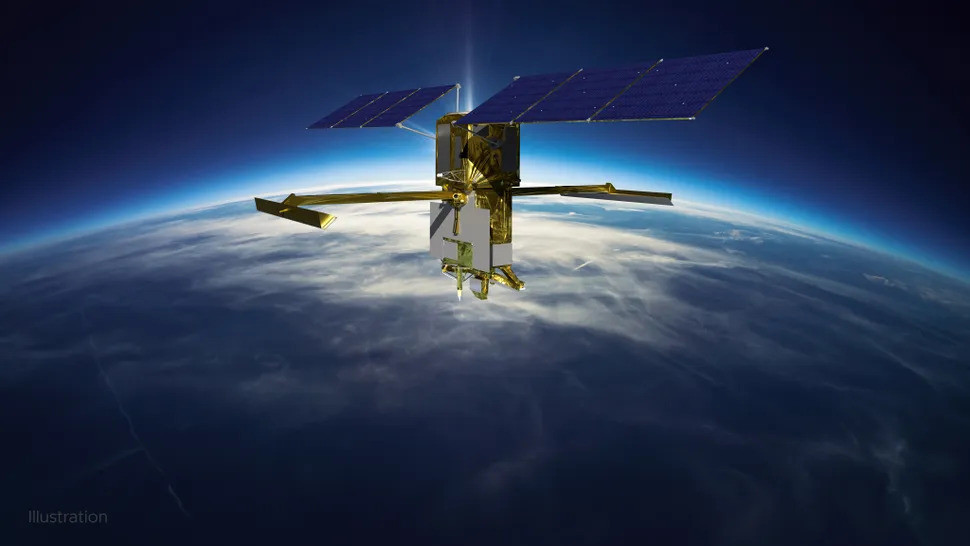
SWOT is a next-generation satellite capable of mapping sea surface height in two dimensions at high resolution. This technology allows scientists to detect small eddies, internal waves, and ocean turbulence that were previously difficult to observe from space. With this capability, the data produced are far more detailed than those from previous-generation satellites. This helps researchers understand sea surface structure more comprehensively.
Research data show that submesoscale activity is very high in regions of major ocean currents such as the Gulf Stream, Kuroshio Extension, Southern Ocean, Andaman Sea, and the Indonesian archipelago. This indicates that small-scale ocean dynamics are an important global process, not merely a local phenomenon.
Impacts on Climate and Marine Ecosystems
Researchers have found that small ocean eddies help transfer heat from the surface to deeper ocean layers with significant intensity. This process can affect sea surface temperature and the supply of moisture to the atmosphere, thus relating to weather and climate formation. If the distribution of ocean heat changes, then regional and global weather patterns may also change.
Additionally, small-scale ocean movements bring nutrients from deeper waters to the surface, supporting the growth of phytoplankton as the base of the marine food web. Therefore, this phenomenon is important for fisheries productivity and the balance of marine ecosystems. The presence of sufficient nutrients at the surface enhances biological productivity and supports the survival of various marine species.
image source:
https://cdn.mos.cms.futurecdn.net/dnW25bxSQjepZQCv8VQAxF-970-80.jpg.webp
Writer: Elvan Gamaliel