Transformation of Underwater Communication through AI-Based Adaptive Systems and Swarm AUV Collaboration
4 months ago
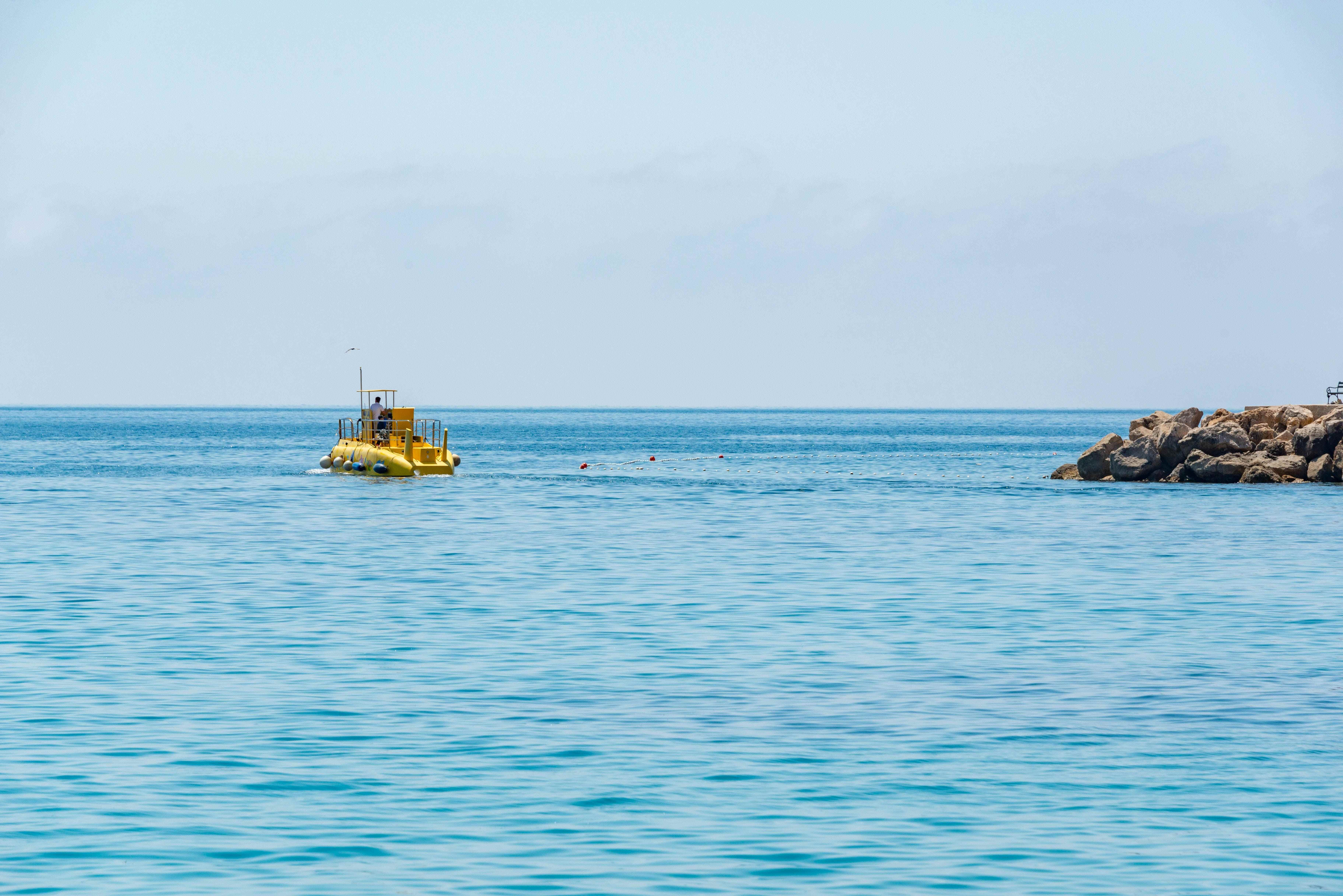
Underwater communication is an important aspect of supporting resource exploration, environmental monitoring, and maritime security. However, the ocean's complex physical conditions, such as signal attenuation, acoustic interference, and the limited penetration of electromagnetic waves, make data transmission difficult. Various methods like acoustic communication, optical communication, and radio frequencies have been used, yet each has limitations in terms of range, speed, or stability.
As the need for real-time marine monitoring systems increases, conventional approaches become less effective. The concept of the Internet of Underwater Things (IoUT) and the use of Autonomous Underwater Vehicles (AUVs) open opportunities to build broader and more dynamic networks. Therefore, this article discusses an AI-based adaptive communication system approach combined with swarm AUV collaboration as a solution to create more flexible, efficient, and environmentally-responsive underwater networks.
Limitations of Conventional Underwater Communication Systems
Current underwater communication systems are still dominated by single-technology approaches, so no single method can operate optimally under all operational conditions. Acoustic communication can reach long distances but has limitations like noise, multipath, and high latency, while optical communication offers high speeds but is limited by water conditions like turbidity.
These limitations create a trade-off condition, where improving performance in one aspect is often followed by a decline in another. Furthermore, the dynamic marine environment makes static communication systems difficult to maintain stable data transmission.
Approaches that remain relatively centralized also limit network flexibility, especially when the number of devices increases. Without adaptive coordination, communication complexity can rise and reduce overall system efficiency.
AI and Swarm AUV-Based Adaptive and Collaborative Communication Systems
An AI-based approach enables underwater communication systems to adapt dynamically to environmental changes. The system can select the most suitable transmission method in real-time, no longer relying on just one technology. This approach also enables the development of more predictive systems by utilizing historical data and environmental conditions.
On the other hand, the use of swarm AUVs supports the formation of a more distributed and flexible network. Each unit can act as a communication node, extending network reach and maintaining connectivity amid changing environmental conditions. In a swarm system, coordination between units enhances network efficiency and resilience compared to a centralized approach.
The combination of an adaptive system and swarm collaboration opens the opportunity for creating self-organizing networks, where each node can autonomously adjust its role. The system can reconfigure in real-time, such as finding alternative communication paths or adjusting unit positions to maintain transmission quality. This approach makes the network more resilient to interference and more responsive to environmental changes.
The advancement of underwater communication shows a need for more adaptive and flexible systems to cope with a dynamic environment. The limitations of conventional technology confirm that single-method communication approaches are no longer adequate. The integration of AI and swarm AUV collaboration offers a more efficient solution for building modern underwater communication networks. Furthermore, the move toward self-organizing systems is a crucial step in creating autonomous and responsive networks.
Thus, the transformation of underwater communications is not only a technical innovation but also an essential foundation for supporting the management and utilization of marine resources in the future.
Image Source:
https://www.pexels.com/photo/pontoon-near-rocks-on-shore-15565792/
Writer:
Celline Sulaeman